

Hand Talk
Hand Talk’s Story
In a hospital emergency room in the northern Brazilian province of Alagoas, Doctor Davi Freitas was trying to communicate with an agitated 13-year-old girl. No one, including the girl’s mother, could figure out what was wrong because the girl was hearing impaired. Suddenly, Doctor Freitas remembered that he could ask Hugo.
Hugo is the virtual interpreter for Hand Talk, a Brazilian social enterprise that creates technology to offer automatic translation from spoken language into Libras, the Brazilian sign language. With Hugo’s help, Doctor Freitas was able to determine that his young patient had a terrible headache, which turned out to be a warning sign of intracranial bleeding, for which she was immediately and successfully treated.
Hugo can be found throughout Brazil, from hospital emergency rooms to classrooms to bars. With purposefully oversized hands and carefully designed, complex facial expressions, Hugo is a sign language interpreter you can take with you anywhere.
There are more than 360 million deaf people in the world, and 10 million in Brazil. Often, deaf people encounter difficulties with literacy, since the written language relies on phonetic learning. In Brazil, more than 70 per cent of deaf people have difficulty communicating in their native language. Founded in 2012, Hand Talk helps deaf people break down communication barriers that stand in the way of their education, inclusion and independence.
Hand Talk has been recognized with eight international and regional awards, including being chosen by the United Nations as “the best social app in the world.” Already, over 1 million people have downloaded the app and Hugo processes some 6 million translations every month. As Doctor Freitas discovered, the app has the potential to save lives in an emergency situation. More common, however, is its ability to improve lives by helping deaf people become active participants in society.
Fundación Construir
Fundación Construir’s Story
Following President Evo Morales’s electoral victory, the Bolivian Constituent Assembly convened on August 6, 2006, with the purpose of drafting a new national constitution. Fundación Construir began as a panel of experts hired to advise the Assembly on how to integrate western and indigenous legal systems in the new constitution, ensuring an emphasis on the many different national groups that make up Bolivia. By enabling dialogue between politicians, judges and indigenous communities, the panel contributed to three historic articles recognizing traditional indigenous practices of law and conflict resolution.
The panel of experts became Fundación Construir in 2008, and since then it has continued helping policy-makers, judges, and indigenous communities implement the new constitution’s inclusive vision of the law, to build a pluralistic Bolivia. Construir, indeed, means “to build.” It is not an easy task. Bolivia has 36 official languages, 50 indigenous nations, and more than 2,000 different legal systems. It is a polarized country where consensus is hard to reach.
Construir works as a think tank and a convener. It produces valuable research, such as a comprehensive mapping of indigenous legal systems, and then acts as a link between the state and indigenous communities, ensuring that best practices are followed when jurisdictions work together. Construir also provides training in indigenous communities to ensure their full integration within the justice system and trains judges and other public servants to help them advance respect for traditional indigenous justice.
Construir has also helped develop the skills of hundreds of indigenous women, who now act as community leaders linking remote communities with institutions. These women have been granted the legal status of “community advocates” and have been instrumental in the fight against human trafficking and violence against women and children.
In a country with so many disparate groups and challenges, the work of Construir can be a balancing act. It is sustained by a belief in human rights and a pluralist vision of justice, one that represents every single member of Bolivia’s diverse population.
BeAnotherLab
BeAnotherLab’s Story
We have all heard the old adage: before you judge someone, walk a mile in their shoes. But how, exactly, do you do that?
BeAnotherLab has an answer. A multinational group headquartered in Spain with nodes in ten other countries, BeAnotherLab unites artists, scientists, researchers, anthropologists and practitioners to help reduce implicit bias and promote empathy through virtual reality technology that creates an “embodiment” experience, the illusion of being in another person’s body and seeing the world through their eyes.
Their Machine to Be Another has been applied to art, conflict resolution, scientific research, social issues, healthcare and education in various public spaces in over 20 countries. At the 2015 United Nations General Assembly, delegates could see themselves in the body of Nicole Goodwin, an American poet and Iraq war veteran, while listening to her talk about the harm the war brought to her life. With the help of Oculus Rift headsets, first-person cameras, and synchronized movements, participants have even swapped genders. Others have experienced reality from the perspective of a person with physical disabilities; or a mother of a young black man murdered by police; or a Sudanese refugee at the Holot Detention Center in Israel. Following the experiment, participants meet in person to discuss the experiment and share their stories.
BeAnotherLab’s current focus is the Library of Ourselves, a long-term project that helps participants better understand themselves, by understanding others. Working through cultural and educational institutions around the world, BeAnotherLab offers its methodology and immersive virtual reality technology to create content, what they call “embodied storytelling,” and engage with different audiences in an effort to create transformative encounters between communities in conflict.
In a world that often divides us by our differences, BeAnotherLab wants to instead highlight our shared human experiences. As BeAnotherLab co-founder Philip Bertrand said, “More than individuals, we are part of a broader system called humanity.”
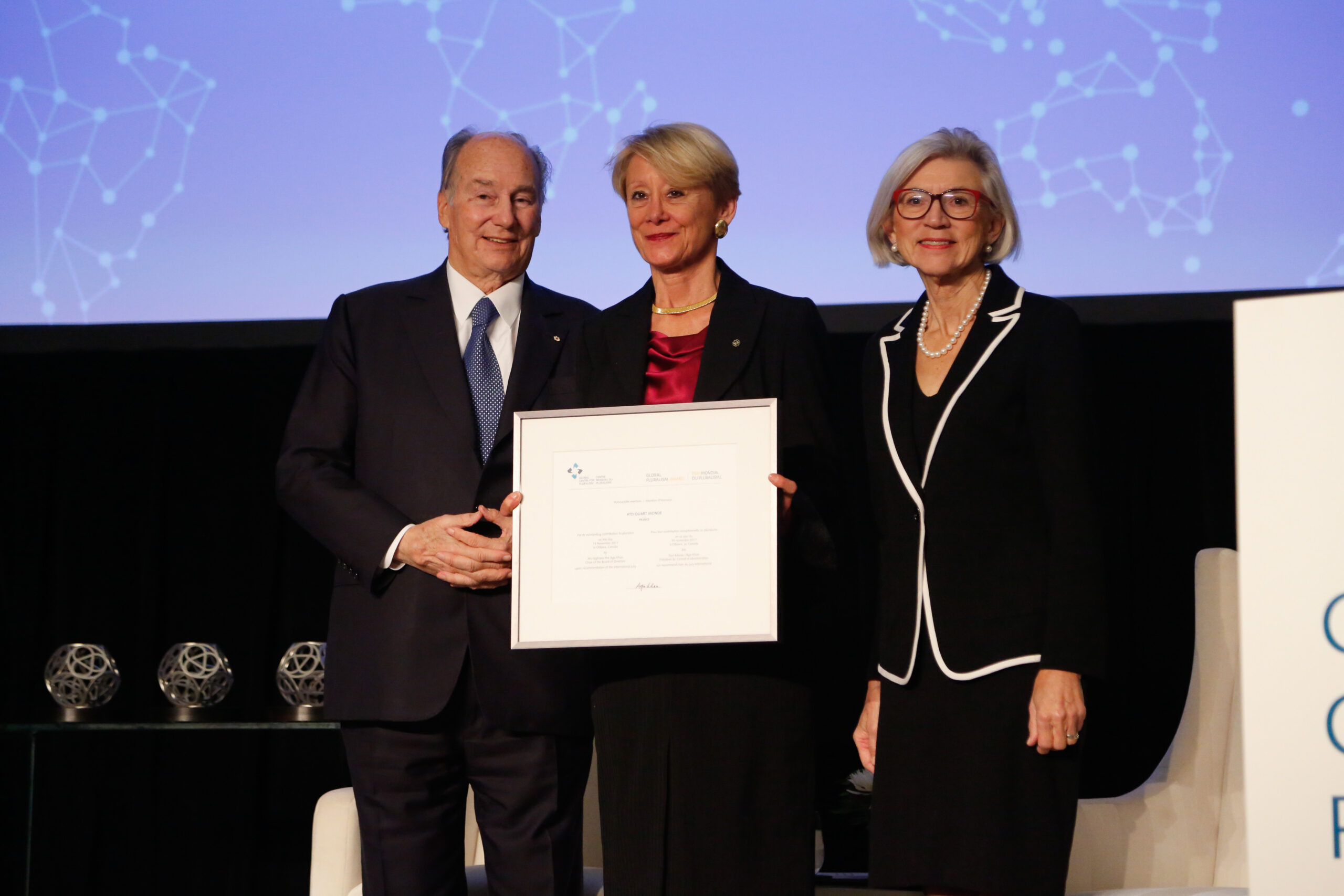
ATD Quart Monde
ATD Quart Monde’s Story
In 1957, having just arrived in France to serve as chaplain to 250 homeless families, Father Joseph Wresinski walked through Noisy-le-Grand, an emergency housing camp near Paris. The conditions in the camp were appalling: sheet-metal huts in a muddy field, four water pumps for over a thousand people, and children dying of cold or of fire when makeshift heating systems malfunctioned.
A child of poverty himself, Father Joseph understood the people in Noisy-le-Grand. One of the first things he did was replace the soup kitchen and used clothing dispensary with a library and kindergarten. This sent a clear message, one that is still at the core of the ATD Quart Monde movement. People living in poverty do not need pity and charity; they need to be involved in the fight against poverty. They need to have their voices heard by decision-makers.
“I will take you up the steps of the Élysée, the United Nations and the Vatican,” Father Joseph promised the families in Noisy-le-Grand. At the time of his death in 1987, after 30 years of alliance-building and advocacy work, he had brought them to speak to the highest authorities in France, and with diplomats at the United Nations. The visit to the Vatican was not far behind, occurring two years later.
The community development project that Father Joseph began in Noisy-le-Grand grew to become ATD Quart Monde, an international organization headquartered in Paris dedicated to eradicating poverty and empowering the world’s most disadvantaged people. ATD stands for All Together in Dignity, and, true to its name, the movement has united thousands of people from all political, religious, cultural and socioeconomic backgrounds from 34 countries.
In France, ATD Quart Monde has helped include marginalized groups into society through structural and legal changes, an essential component of pluralism. For instance, it was instrumental in passing a minimum welfare income for the unemployed, universal health coverage, and the enforceable right to housing. Half of the social assistance in France today stems from ATD’s actions. On the international level, ATD Quart Monde is represented at UNESCO and the United Nations.
From the muddy fields of Noisy-le-Grand an international movement was born. Today, it unites people from five continents and from all walks of life in the work of building a better, poverty-free world.
Soliya
“Soliya is at the forefront of its field – harnessing technology as a bridge across differences to connect and engage young people. It is a young success story, already increasing empathy and understanding among its participants, and helping a new generation of leaders set foot into the world with a direct personal experience of the values of pluralism, and a commitment and capacity to confront its biggest challenges.”
Joe Clark, former Prime Minister of Canada and Chair of the Global Pluralism Award Jury.
Soliya’s Story
At a moment in time before Facebook, Twitter, and Instagram, two forward-thinking founders recognized how sustained dialogue in the digital space could change the world — for good.
Soliya, a United States 501(c)3 not-for-profit headquartered in New York, was launched in 2003 by Lucas Welch and Liza Chambers as a response to the growing distrust in a post-September 11th society. Soliya pioneered a field that is now called Virtual Exchange, bringing together young people across cultures and continents in synchronous online dialogues that instill the skills to think critically, approach with curiosity and lead with empathy.
Guided today by chief executive Waidehi Gokhale, Soliya employs the Exchange Portal, a custom videoconferencing platform, through which its global team brings together over 5,000 young adults each year in small, diverse groups as part of the Connect Program. Discussing current events with trained facilitators, participants from the United States, Canada, Europe, Middle East, North Africa, and South and Southeast Asia learn that people’s identities are multi-dimensional. By voicing and listening to one another’s stories, they gain greater understanding and build empathy.
By empowering individuals with the ability to engage with and across difference, Soliya helps future change-makers have the difficult conversations necessary to break cycles of bias. Soliya’s programs are helping participants to eliminate negative notions of ‘the other’ and to thrive in a 21st century society. To date, Soliya has worked with over 220 higher education institutions and learning centers in more than 30 countries and 29 of the United States to include programs for credit as part of existing classes across numerous disciplines. That footprint continues to expand with new partnerships. Soliya’s impact has been proven through measurement and evaluation collected in association with the Saxelab Social Cognitive Neuroscience Laboratory, Massachusetts Institute of Technology; the Annenberg School of Communication, University of Pennsylvania; Oxford Centre for the Study of Intergroup Conflict, University of Oxford; and University College London.
Nearly two decades after its inception, Soliya has shown itself to be more relevant than ever, as it bridges divides and builds strong, pluralistic societies.
Research shows that a cross-cultural experience during an individual’s formative years can lead to more cooperative and compassionate relationships. However, accessibility is often an issue. Many young people around the world live in homogenous communities, and, due to socioeconomic, institutional, geographic or personal barriers, have limited opportunities to engage with different viewpoints or identities. A meaningful cross-cultural exchange can drastically shift views of difference.
SINGA
“In today’s media cycle, bad news about migration often eclipses positive stories. The SINGA community offers a much more optimistic outlook. SINGA’s programs have opened up avenues for connection and empathy and are actively challenging misinformation and xenophobia around asylum.”
Joe Clark, former Prime Minister of Canada and Chair of the Global Pluralism Award Jury.
SINGA’s Story
What if migration became a story about opportunity rather than crisis? What if instead of talking about “us” vs. “them,” we focused on the potential of “we”?
Consider the story of two men. Foday is an accountant from Sierra Leone. Cyril is a chartered accountant from KPMG France. The two men get to know each other. Foday makes progress in French, while Cyril discovers that he is not sitting with a refugee, but a fellow accountant, an expert in his field and, ultimately, a new friend.
Picture Donia who started a successful catering company offering cuisine from around the world made by women from immigrant backgrounds.
Learn about Simon who built co-housing project for both refugees and French people.
By connecting individuals, SINGA contributes to safer, more pluralist and creative societies where refugees and migrants, like everyone else, have a role to play. SINGA believes that every individual has the right to belong wherever he or she chooses. This requires creating spaces where people can share meaningful experiences and build lasting relationships and professional networks.
SINGA means “link” in Langala, a language spoken predominantly in the Democratic Republic of the Congo. To link newcomers and their host communities, SINGA and local populations launched a platform where individuals and organization can offer events and programs to help bridge differences and bring people together.
SINGA has worked with over 5,000 refugees and 20,000 locals. Thanks to incredible citizen mobilization and the involvement of organizations, the movement has spread to 19 cities in Europe, with nine other locations on the way, and runs eight incubators dedicated to migration-led innovation. Within nine months of participating in SINGA’s programs, most refugees find jobs, have sustainable housing and can communicate in French thanks to this new social network where they collaborate, create and experience life in their host countries. The benefits of these connections are far from one-sided. There is a deep sense of enrichment on both sides of the exchange because – and this is the only rule of SINGA – newcomers and locals participate TOGETHER.
These relationships are transforming the larger story of migration in Europe from one of distrust to one of friendship and a shared sense of belonging. Last but not least, SINGA’s programs are unleashing creativity and bringing new ideas, projects, associations and companies to life.
Concerns about the mass movement of people exploded into public consciousness in 2015. Refugees and migrants from the Middle East and Africa fleeing drought, poverty and violence began to arrive on European shores. In 2018, the estimated refugee population in France was around 350,000. Xenophobia has spread throughout Europe. Newcomers are portrayed by certain media and politicians as threats or victims, endangering their host society or draining its resources. SINGA was founded to help change perceptions of refugees and asylum seekers in Europe.
Rupantar
“The jury was impressed by Rupantar’s creative approach of using cultural performances to address sensitive social issues. Rupantar is truly working at the grassroots – mobilizing the most vulnerable in Bangladesh, including women and youth – to help build a vibrant democracy.”
Joe Clark, former Prime Minister of Canada and Chair of the Global Pluralism Award Jury.
Rupantar’s Story
Dressed in colourful costumes, performers sing, dance and play instruments on an outdoor stage. “Human rights are violated time and again,” they sing, “and yet the people are not vocal.”
While entertaining, the performance is also a call to action, urging the audience to claim their rights and protect their vulnerable populations. This is a traditional form of popular folk performance called a pot song. It is also one of the many tools used by the non-profit organization Rupantar to address pressing social issues in Bangladesh.
Rupantar, which means “transformation,” has been working in Bangladesh since 1995. The organization was founded by two individuals from different religions who shared a common vision for a just society. In such a complex setting, Rupantar has adopted a truly holistic approach to encourage social change and promote pluralism. Their work covers five programmatic areas: democracy and political empowerment, peace and tolerance, disaster management and climate change adaptation, children and youth rights, and cultural dialogue through popular media and folk theatre. With a diverse staff of 525, the organization is the largest awareness and social mobilization organization in Bangladesh.
Rupantar works at the grassroots level to empower vulnerable populations to be agents for change in their communities. They are especially successful in mobilizing women and youth leaders. For example, since 1998, Rupantar has helped set up 32 government-registered women’s organizations, empowering women to run for and win seats in local elections. Rupantar has also been successful in implementing the Promoting Engagement and Actions for Countering Extremism (PEACE) initiative, which connects youth from different social groups to promote tolerance and pluralism in their communities. They have run more than 200 faith-based dialogues in which Muslim, Hindu and Christian leaders develop action plans to combat extremism.
Rupantar’s work is extensive. Sometimes it takes the form of a dialogue between religious leaders. At other times, it is a pot song on land rights or a climate change awareness campaign. In such a complex country, their approach has to be multi-faceted. What is constant is the organization’s goal of mobilizing Bangladesh’s diverse population to create lasting peace, stability and vibrant democracy.
Bangladesh is one of the most densely populated countries in the world with considerable religious and ethnic diversity. The country’s history is marked by periods of colonial rule, poverty, famine, ethnic tension, political turmoil and military coups. Bangladesh continues to experience substantial economic and social change and faces a number of challenges, including political instability, corruption and discrimination. In recent years, the country’s social unrest has been exacerbated by violent attacks from extremist groups, reports of abuse by law enforcement and a humanitarian crisis caused by the arrival of approximately 740,000 Rohingya from Myanmar.
OnBoard Canada
A program of Ryerson University’s Chang School of Continuing Education
“Canada is a great example of a pluralistic country and yet, we still struggle to get it right. onBoard has helped change the way leadership looks in this country with an approach that should serve as a model to other countries struggling with representation and access to equal opportunities.”
Joe Clark, former Prime Minister of Canada and Chair of the Global Pluralism Award Jury.
OnBoard’s Story
Look around the table at the board members of Canada’s private and public sectors, and you will see a persistent disconnect with the make-up of the Canadian population. Canada has long been proud of its diversity, but the composition of its boards does not relay the same story.
onBoard Canada was created to address this gap between Canada’s decision-makers and its demographic reality. onBoard recognized that it was not enough to be a diverse country; Canada also needed to be actively inclusive. Without real inclusion, how could Canada’s leadership ever benefit from the country’s diversity?
To create pathways to leadership, onBoard Canada offers governance training to interested participants, and board matching to members of underrepresented communities. The organization also offers training to the not-for-profit and public sectors to help leaders recognize their own privilege and provide them with the tools to create more inclusive workplaces. As a program of Ryerson University’s G. Raymond Chang School of Continuing Education, onBoard Canada conducts research in partnership with the Diversity Institute about the lack of diversity in Canada’s leadership.
By helping underrepresented individuals claim a seat at the decision-making table, the organization ensures more Canadians have a say in the decisions that affect them. But Canada’s underrepresented groups are not the only beneficiaries. Boards are invigorated and strengthened by a wide range of voices and perspectives.
onBoard Canada has changed the make-up of not-for-profit and public boards in the Greater Toronto Area and in several cities across the country. It has trained and matched thousands of individuals to board opportunities, with over 1,000 appointments to more than 800 not-for-profit organizations, public agencies, boards and commissions.
By bridging the diversity and inclusion gap in Canada’s leadership, onBoard is raising the standards for modern governance. In the end, all of Canada benefits.
Canada is a diverse country, and recent demographic projections suggest that ethno-cultural diversity will continue to increase. By 2031, 29-32% of the country’s population will be made up of visible minorities. Other diverse communities within Canada have also gained greater visibility and are demanding recognition and representation. Individuals from LGBTQ+ communities are feeling safer to come out publicly; youth are seeking a voice at decision-making tables; and the Truth and Reconciliation Commission identified 94 highly publicized calls to action regarding reconciliation between indigenous peoples and Canadians. Yet leadership does not reflect this reality. In 2017, Ryerson University’s Diversity Institute found that visible minorities make up 3.3% of corporate board positions, an increase of less than 1% since 2014. Although women make up 48% of the workforce, in 2017 they only held 14.5% of all Canadian board seats in companies that disclose this information.
Artemisszió Foundation
“After years of funding cuts from the government and attacks by state-controlled media, Artemisszió is one of the last remaining organizations that is explicitly promoting pluralism in Hungary. This committed team has created a network of welcoming Hungarians resisting the xenophobia and anti-immigrant sentiment in the country.”
Joe Clark, former Prime Minister of Canada and Chair of the Global Pluralism Award Jury.
Artemisszió’s Story
Ten European countries have built border fences and walls. Together, they measure six times the length of the Berlin wall. Hungary is currently home to one of these fortified fences. Artemisszió Foundation asks, what if instead of building fences, we built bridges? What if instead of closing our borders, we opened ourselves up to newcomers?
Since its inception in 1998, Artemisszió Foundation promotes the social inclusion of Hungary’s most disadvantaged populations, including youth from underprivileged backgrounds, Roma women, migrants and refugees.
In this context of fear and prejudice, Artemisszió Foundation offers an alternative. Relying on engaged volunteers and operating within an international network, Artemisszió offers internships, volunteer opportunities, mentorships, language training, cooperation with schools, workshops on democracy and media literacy, support for art activism and much more, all in the interest of fostering mutual understanding and tackling exclusion.
Artemisszió’s indispensable work on cultural diversity is currently at risk. The Hungarian government has severely limited the activities of non-governmental organizations, and the foundation’s support from the European Union has been blocked and some of its professional contracts cancelled. As a result, the organization had to limit the intercultural training it offered. This training was provided to health and education professionals, local authorities, law enforcement and social workers to help them understand and better serve disadvantaged communities. In response, Artemisszió has focused on strengthening its community-based programing. Their network, Mira, connects newcomers and locals through mentorship programs, language learning or social activities, such as dinner parties, movie clubs and city tours.
The fence still lines Hungary’s southern border, but there is hope when organizations like Artemisszió are using innovation and optimism to fight against everything that fence stands for. Through decades of engagement, they have built a strong and active network of organizations and individuals who stand against barriers and will continue to work tirelessly, and joyfully, for an open, tolerant society.
In response to a rise in undocumented immigration to Hungary in 2015, populist Prime Minister Viktor Orbán declared a “crisis situation” and built a 170-kilometre-long, electrified border fence. Anti-immigrant rhetoric – propagated by a largely state-controlled media – has also increased in an effort to advance a national identity based on Christianity. Within the last year, legislation criminalizing services and support to migrants and asylum seekers was passed, making it an offense punishable by up to one-year imprisonment. In August of 2018, a 25% tax on foreign funding to any organization “supporting immigration” was introduced. The ensuing withdrawal of funding from the government and European partners has had a significant impact on these organizations.
Afghanistan National Institute of Music
“The Afghanistan National Institute of Music is sharing a critical message of reconciliation, unity and reconstruction. Its achievements demonstrate how music contributes to pluralism – promoting peaceful, inter-ethnic community building, as it encourages students from diverse backgrounds to collaborate in literal harmony.”
Joe Clark, former Prime Minister of Canada and Chair of the Global Pluralism Award Jury.
Afghanistan National Institute of Music’s Story
In a sunlit courtyard, a conductor stands in front of a group of young musicians. With a wave of her baton, music bursts into the air. The song is loud and upbeat, played on a variety of traditional Afghan and western instruments by boys and girls. A group of young girls sings: “I am a girl, a tree in the sun. I stand against repression. I go forth with knowledge.” This particular concert is in celebration of International Girl Child Day, but, like every performance of the Afghanistan National Institute of Music, it is also a celebration of playing music, something these children would be unlikely to have experienced a decade ago.
The Afghanistan National Institute of Music (ANIM) is the first institute of music where Afghan children regardless of their gender, ethnicity, religion or socio-economic background are trained in a co-educational environment in traditional Afghan and Western classical music, while obtaining a high quality academic education. ANIM is particularly committed to supporting Afghanistan’s most disadvantaged youth, namely orphans and street vendors, and to empowering young girls.
Though ANIM has been celebrated internationally, its success is perhaps best measured by the effects it has had on individual lives. These stories include a street-working child who has become concertmaster of Afghanistan’s first all-female ensemble; or a child from the most remote part of Afghanistan who has become the nation’s first female conductor. On a societal level, it has become a leading institution in promoting peaceful, inter-ethnic community building, as it encourages students from diverse backgrounds to collaborate in literal harmony.
Though no longer under Taliban rule, Afghanistan is still a divided nation with many staunch enemies of music and social inclusion. Despite ongoing threats, ANIM strongly upholds values important for establishing a just and pluralistic society. As Sarmast says, “We are standing against violence and terror with our music.” Or, in the words sung by ANIM’s choir: “This bird will always sing.”
For centuries, a rich and diverse musical culture was at the heart of Afghanistan. But under the Taliban’s brutal regime in the mid-1990s, music was completely banned and educational opportunities, especially for women, were drastically reduced. When the Taliban fell, Ahmad Naser Sarmast, an Afghan musicologist who had sought asylum in Australia, returned determined to restore music to Afghan society and use its soft power to transform lives in a country torn apart by war. He established ANIM in 2010. Today, ANIM is defying cultural taboos and creating a new image of Afghanistan both nationally and abroad.